All entries by this author
Jun 8th, 2012 |
By Marc Applebaum

Perhaps the most exciting thing I have found in becoming a phenomenological psychologist is how fundamentally important it is to value the subjective psychological perspective when seeking to understand people (Giorgi & Giorgi, 2003). Television “reality shows” have become popular because they provide a “fly on the wall” perspective of dramatic events in a world
[continue reading…]
Posted in Praxis |
2 comments
Tags: Broomé, Giorgi, human science, research
Jun 6th, 2012 |
By Marc Applebaum

Empathy “is taken to disclose rather than establish intersubjectivity” (Zahavi, 2001, p. 154). 2012 marks the 10th year of my phenomenologically-based empathy training (Englander, submitted) and what better way to spend an anniversary than bringing a practical application of descriptive phenomenological psychology to the corporate world. In 2012 I was asked to pilot my empathy training with a
[continue reading…]
Posted in Human Science |
3 comments
Tags: Englander, intersubjectivity, Organizational phenomenology
Apr 26th, 2012 |
By Marc Applebaum
Husserl’s phenomenology is epitomized in his call for a return “back to the things themselves,” “Zurück zu den Sachen selbst.” We view this “return” as a shared project. The return, in other words, is intersubjective and not solipsistic: we return to the things in order to dialogue together about them together
[continue reading…]
Posted in Feature |
Comments Off on Welcome to the conversation
Tags: Giorgi, Husserl, intersubjectivity
Apr 23rd, 2012 |
By Marc Applebaum

As a phenomenological psychologist, I participate in the tradition of human science (Ger: Geisteswissenschaften). Since the foundation of this movement in the pioneering work of Giambattista Vico in the 18th century and Wilhelm Dilthey in the 19th, human science researchers have claimed that the study of human beings demands a radically different approach from that
[continue reading…]
Posted in Human Science |
Comments Off on Applebaum: Does Science Matter?
Tags: Applebaum, cultural psychology, human science, Husserl, psychotherapy
Apr 23rd, 2012 |
By Marc Applebaum

I teach and mentor graduate psychology students in Descriptive Phenomenological Psychology. Learning how to practice phenomenological research, students gain a lived-sense of the feature of consciousness that Edmund Husserl, drawing on the work of his teacher Franz Brentano, termed “intentionality”. Within Husserl’s phenomenology intentionality signifies (in part) that everything we can experience and know is
[continue reading…]
Posted in Praxis |
Comments Off on How Phenomenologists Listen
Tags: Applebaum, epoche, Husserl, intentionality, psychotherapy, reduction
Apr 23rd, 2012 |
By Marc Applebaum

“Husserlian phenomenology, in its search for meanings, is guided by respect for the given.” –Jitendranath Mohanty Practicing phenomenological psychology, whether as a researcher or as a clinician, means learning a craft. Its raw materials are the descriptions given to us by interview participants—or, if we are psychotherapists, by our clients. Our “tools” derive from the
[continue reading…]
Posted in Praxis |
Comments Off on The Craft of Phenomenology
Tags: Applebaum, Giorgi, Husserl, research
Apr 23rd, 2012 |
By Marc Applebaum
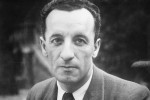
Community: from the Latin communis, meaning common, public, general, shared by all or many. Phenomenological psychology as expressed by Maurice Merleau-Ponty is an exploration intended to illuminate the shared psychological meanings and structures that we live pre-reflectively in daily experience. He offers an elegant example at the beginning of the essay Science and the Experience
[continue reading…]
Posted in Merleau-Ponty |
Comments Off on Applebaum: Phenomenology, community, and intercultural dialogue
Tags: Applebaum, Husserl, intersubjectivity, Merleau-Ponty, postmodernism
 Follow
 email
email